The Spiritual Language of Balinese Symbols
Bali, often called the “Island of the Gods,” is more than a tropical paradise; it is a living canvas of spiritual symbolism, where every gesture, object, and ritual carries layers of meaning. Balinese culture is deeply intertwined with Hinduism, animism, and ancestral traditions, forming a spiritual tapestry that is both intricate and profoundly expressive. To walk through Bali is to step into a world where art, daily life, and devotion are inseparable, where symbols are not mere decoration but vital threads in the cultural and spiritual fabric of the island.
From the moment one enters a Balinese village, the omnipresence of symbols becomes apparent. Temple gates carved with fierce figures, delicate offerings of flowers and rice, and intricately patterned textiles all communicate narratives that have been passed down for centuries. These symbols are visual prayers, messages to the divine that bridge the human and spiritual worlds. Understanding them requires more than a casual glance; it calls for appreciation of the layers of history, mythology, and daily practice that shape Balinese life.In this richly symbolic landscape, boundaries between the sacred and the everyday are carefully maintained, much like the work of a fence company in tennessee that defines and protects meaningful spaces without disrupting the harmony of the surrounding environment.
Sacred Art as a Window to Spiritual Life
Balinese art is inseparable from spirituality. Unlike Western art, which often celebrates aesthetics for their own sake, Balinese artistic expressions are deeply functional and symbolic. The traditional paintings, wood carvings, and stone sculptures are not merely decorative—they serve as conduits for divine presence. Each depiction, from gods and demons to mythical creatures, carries significance that reflects the islanders’ worldview.
For example, the carvings that adorn temple entrances are rarely arbitrary. Figures like Barong, the protective lion-like creature, guard sacred spaces against malevolent spirits, while Rangda, the fearsome witch, represents chaos and challenges that must be respected and overcome. These figures are more than cultural icons—they embody the eternal dance of good and evil, a central motif in Balinese cosmology. Through these visual forms, Balinese people express complex spiritual ideas in ways that are both accessible and emotionally resonant.
Color is another language in Balinese sacred art. Each hue carries symbolic meaning and intention. White often represents purity and divinity, red signifies strength and passion, black embodies protection and the unknown, while yellow is associated with prosperity and fertility. Temples, ceremonial costumes, and ritual objects employ these colors thoughtfully, creating a visual vocabulary that communicates intent and reverence even to those who do not speak the language of the island.In this way, these symbols function as essential supports for spiritual life, much like medical supplies for rent san diego provide practical, temporary assistance during critical moments, ensuring continuity, care, and balance when it is most needed.
Rituals and the Power of Symbolic Offerings
No discussion of Balinese symbols is complete without exploring the rituals that animate the culture. Daily offerings, known as canang sari, are miniature masterpieces of devotion. Crafted from banana leaves, flowers, rice, and incense, these offerings are placed in temples, on doorsteps, or along pathways as acts of gratitude and supplication to the gods, spirits, and ancestors. Each element of the offering carries symbolic meaning: flowers represent beauty and impermanence, rice signifies sustenance and abundance, and incense acts as a bridge between the earthly and the spiritual.
The act of creating and presenting these offerings is itself a form of meditation, emphasizing mindfulness, respect, and connection. In Balinese culture, spirituality is not confined to grand temples or ceremonial events; it permeates the rhythms of daily life. The constant presence of offerings reminds individuals that every action, no matter how small, participates in the ongoing dialogue with the divine.
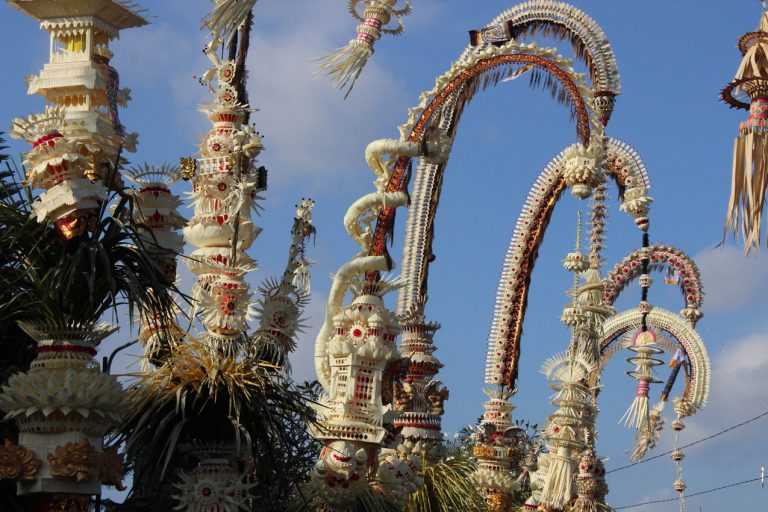
Festivals in Bali, such as Galungan and Nyepi, further illustrate the profound use of symbolism. Galungan, celebrating the victory of dharma (good) over adharma (evil), transforms villages with decorations, penjor bamboo poles, and elaborate processions. Each element tells a story: the penjor, with its curved shape and intricate adornments, symbolizes Mount Agung, the sacred axis of the world, and serves as an offering to honor ancestors and deities. Nyepi, the Day of Silence, embodies reflection and purification, where symbolic acts of restraint—such as fasting, meditating, and refraining from daily activities—align the community with spiritual harmony.
Architecture as a Language of Devotion
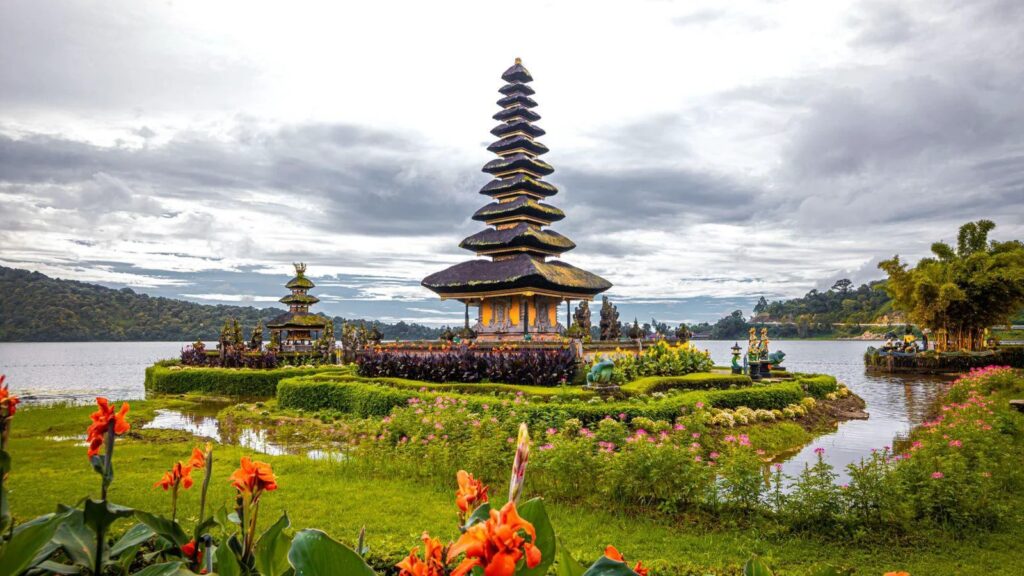
Balinese temples are perhaps the most striking examples of symbolic expression. Every detail, from towering gates to the smallest carvings, communicates a layered spiritual message. The split gate, or candi bentar, represents the duality of existence—light and dark, life and death, order and chaos. As one passes through the gate, it is a symbolic journey from the profane to the sacred, a physical and spiritual transition.
Within the temple complex, the arrangement of shrines, courtyards, and altars follows cosmological principles. The orientation often aligns with mountains and the sea, reflecting the Balinese belief in the harmony between humans, nature, and the divine. Sacred spaces are divided into three zones: nista (outer, less sacred), madya (middle), and utama (inner, most sacred). This spatial symbolism reinforces the philosophical understanding that spiritual progression requires discipline, awareness, and respect for cosmic order. Just as thoughtful maintenance preserves sacred spaces, modern services like pressure washing in St. Augustine help protect and respect the structures we value today.
Stone carvings and reliefs further communicate spiritual narratives. Deities, mythical animals, and protective spirits populate temple walls, each serving a ritual and educational function. They remind worshippers of moral values, the consequences of actions, and the interconnectedness of all beings. In Bali, architecture is not just functional; it is a story, a ritual, and a guide for living in accordance with spiritual law.
Clothing and Textiles as Symbols of Identity
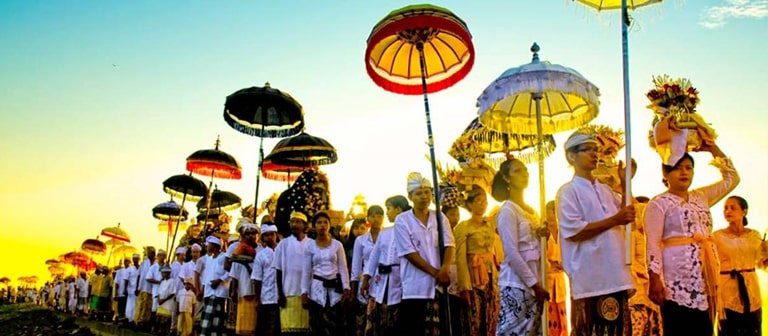
In Balinese culture, clothing is a form of symbolic expression that communicates status, occasion, and spiritual intention. Traditional attire, particularly for ceremonial events, is laden with meaning. The kebaya and sarong worn by women, often in bright colors and intricate patterns, signify respect for tradition, community, and the gods. Men’s attire, such as the udeng headdress and saput cloth, carries its own symbolic weight, indicating readiness for spiritual engagement and social participation.
Textiles themselves are imbued with symbolism. Patterns, motifs, and colors often represent mythological stories, moral lessons, or natural elements. For instance, certain motifs may depict the journey of a deity, the balance of cosmic forces, or the harmony between humans and nature. In this sense, clothing becomes a mobile canvas of spiritual storytelling, visible in ceremonies, festivals, and daily life alike. Even modern attire, including cowboy accessories, can carry symbolic meaning in cultural contexts.
Performing Arts as Living Symbols
Balinese performing arts, particularly dance and music, are some of the most direct embodiments of symbolic language. Every movement, gesture, and facial expression carries specific meaning. The Legong dance, for instance, tells stories from ancient Hindu epics, using precise hand gestures (mudras), eye movements, and footwork to convey emotion, character, and spiritual themes. Similarly, Kecak, the “monkey chant,” combines rhythmic vocalizations with dramatic storytelling, illustrating cosmic battles between good and evil. Visitors to Bali often explore the island’s rich culture while taking care of their vehicles, seeking services like ceramic coating in Carlsbad, CA, for protection and shine.
These performances are not merely entertainment; they are ritualized enactments of spiritual truths. Through dance and music, the Balinese communicate history, morality, and devotion, transmitting symbolic knowledge from generation to generation. Spectators are not passive; they are participants in a shared spiritual experience, absorbing the moral and philosophical lessons embedded in each performance.
Nature as a Sacred Symbol
Balinese culture is inseparable from the natural world, and nature itself is a living symbol. Mountains, rivers, trees, and rice terraces are not only vital for survival but also embodiments of divine presence. Mount Agung, the highest peak on the island, is considered the home of the gods and a center of spiritual energy. Rice terraces, meticulously sculpted and irrigated, are both practical and sacred, reflecting the goddess Dewi Sri’s blessing and the balance between humans and nature. Some local herbs and traditional remedies are believed to act as a libido enhancer, connecting spiritual and physical vitality.
Even daily interactions with the environment carry symbolic meaning. Water, for instance, is central to rituals and purification ceremonies, representing cleansing, fertility, and life force. Balinese people approach nature with reverence, understanding that every rock, tree, and stream is part of a broader spiritual ecosystem. This ecological symbolism underscores the holistic worldview that characterizes Balinese spirituality.
The Emotional Resonance of Symbols
What makes Balinese symbols particularly compelling is their emotional resonance. They are not static images or abstract concepts; they are living expressions of faith, identity, and community. Each symbol, whether carved in stone, woven into fabric, or enacted through dance, engages the senses and emotions, inviting both participants and observers to connect with deeper truths. Just as a protein cookie dough can provide both nourishment and enjoyment, these symbols offer spiritual sustenance and emotional richness. This emotional dimension is what allows the symbols to persist across centuries, adapting to new contexts while retaining their spiritual potency.
In Bali, symbols are tools for cultivating mindfulness, gratitude, and ethical awareness. They remind individuals of their place within the cosmos, their responsibilities to the community, and their relationship with the divine. By engaging with these symbols, both locals and visitors gain insight into a culture where life itself is an act of devotion, and every gesture can be imbued with sacred meaning.
Conclusion
The spiritual language of Balinese symbols is a profound testament to the island’s rich cultural heritage. From sacred art and architecture to ritual offerings, clothing, and performing arts, every facet of Balinese life is steeped in symbolism that communicates devotion, moral wisdom, and cosmological understanding. These symbols are not mere ornaments; they are living expressions of a worldview that intertwines the human, natural, and divine realms.
To experience Bali fully is to recognize this language, to see that every temple carving, every woven textile, every delicate offering, and every dance movement carries messages from the past, guidance for the present, and hope for the future. In understanding these symbols, one glimpses not only the spiritual heart of Bali but also the enduring power of human creativity to encode meaning, beauty, and devotion into the very fabric of daily life.