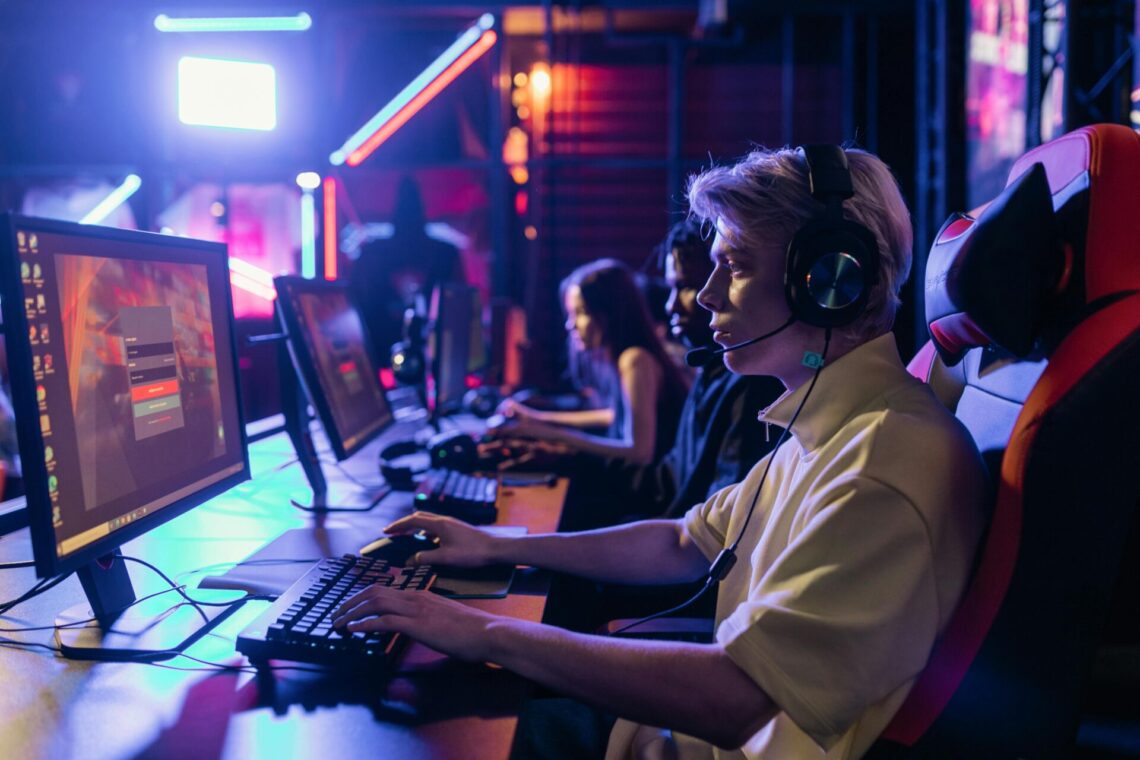
Multiplayer Online Battle Arenas, commonly known as MOBAs, have become a dominant force in the gaming world, attracting millions of players and spectators globally. Titles like League of Legends, Dota 2, and Heroes of the Storm have transformed competitive gaming into a spectacle with professional leagues, massive tournaments, and global fanbases. Despite their popularity, MOBAs are widely regarded as some of the most difficult games to master, especially for newcomers. Their steep learning curve can intimidate even experienced gamers, and many drop out before they fully understand the depth of gameplay involved. The complexity of MOBAs is not arbitrary—it arises from the intricate combination of cognitive load, game literacy, and pattern recognition that players must develop simultaneously to succeed. Understanding why these games are so challenging requires a deep look at how the human brain processes information, adapts to new systems, and learns to anticipate complex interactions in dynamic environments.
At the heart of the difficulty in learning MOBAs is the immense cognitive load they place on players. Cognitive load refers to the total amount of mental effort being used in working memory, and MOBAs consistently demand that players process vast amounts of information in real-time. Every second of gameplay involves decisions about movement, resource management, skill usage, positioning, and team coordination. Unlike single-player games, where players can pause or take time to analyze situations, MOBAs operate in a continuous, high-pressure environment. Players must constantly monitor multiple sources of information: their own character’s health and abilities, the positions and likely actions of opponents, map awareness, minion waves, jungle objectives, and cooldown timers. The simultaneous attention to all these factors creates a mental strain that can be overwhelming for newcomers, which is why beginners often feel lost or make errors under pressure. This level of focus is similar to the attention a veteran clothing brand must pay to every detail of design and production to maintain quality and consistency.
The cognitive load is further intensified by the necessity of prioritization. Players cannot respond equally to all stimuli; they must constantly decide which elements of the game require immediate attention and which can be temporarily ignored. For instance, focusing on last-hitting minions for gold while also tracking an approaching enemy ganker requires rapid mental shifting. This process engages the prefrontal cortex, which is responsible for decision-making and attention management. Studies in cognitive psychology suggest that tasks demanding high levels of divided attention can significantly slow reaction times and reduce overall performance until players develop expertise. In MOBAs, the sheer volume of simultaneous decisions magnifies this challenge, creating a learning environment that is mentally intense and initially discouraging.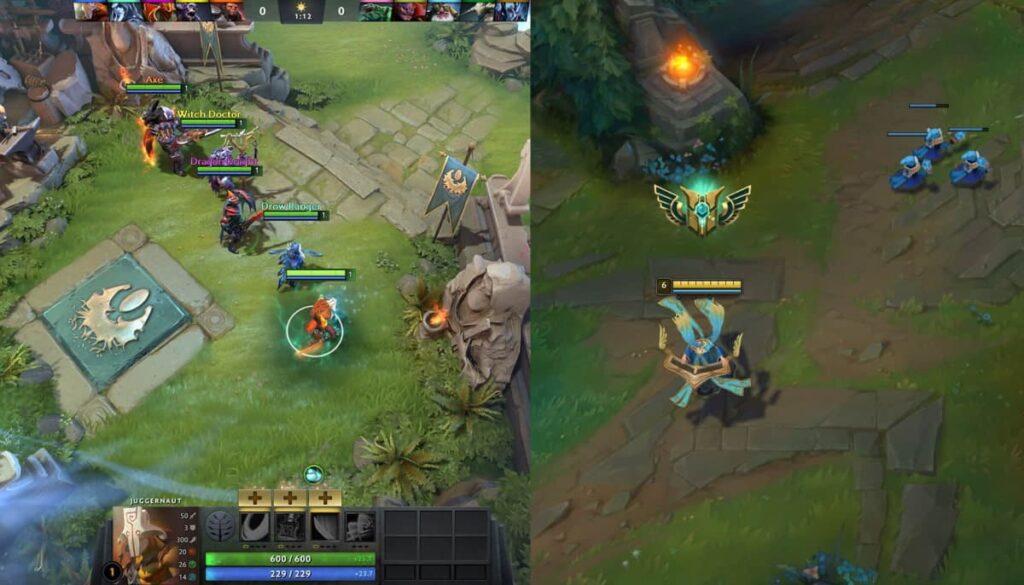
Game Literacy: Understanding the Rules, Mechanics, and Meta
Beyond cognitive load, MOBAs demand extensive game literacy. Game literacy refers to a player’s understanding of the rules, mechanics, and emergent strategies that define a game’s ecosystem. Unlike straightforward games with clear objectives or linear progression, MOBAs feature an immense array of interdependent systems that interact in complex ways. Players must grasp not only the basic mechanics of their chosen heroes or champions—such as abilities, item builds, and roles—but also the subtleties of map control, vision, power spikes, and timing. This layered system of knowledge creates a significant barrier for new players, who may feel overwhelmed by the amount of information necessary just to play effectively.
Meta-knowledge, often referred to simply as “the meta,” adds another dimension of complexity. The meta encompasses the strategies, character choices, and item builds that are currently considered optimal within the competitive community. Because MOBAs are constantly updated with patches, balance changes, and new content, the meta evolves continuously. Players must not only learn the core mechanics but also keep pace with these changes, understanding which heroes counter others, which items synergize with certain abilities, and how shifting strategies affect overall gameplay. Mastering the meta requires players to absorb a vast and dynamic body of knowledge, which often feels like learning a new language every few months.
Another element of game literacy is the ability to read intentions and predict opponent behavior. MOBAs are as much about understanding psychology as they are about mechanical skill. Recognizing patterns of movement, predicting when an enemy will engage or retreat, and interpreting the state of the game in terms of potential strategies are all critical. Players who lack this understanding often struggle to coordinate with teammates, leading to suboptimal decisions and a sense of frustration. High-level game literacy is therefore not just about knowing what buttons to press—it involves a holistic understanding of the game’s ecosystem, the consequences of choices, and the intricate web of interactions that define the competitive environment.
Pattern Recognition: Learning to Anticipate in Real-Time
A third key factor contributing to the difficulty of MOBAs is the reliance on pattern recognition. Pattern recognition is the ability to identify regularities, sequences, or recurring situations and respond appropriately. In MOBAs, success hinges on a player’s ability to quickly recognize patterns in the behavior of opponents, teammates, and the game environment. This could include predicting enemy rotations, understanding wave management strategies, or identifying visual and auditory cues that signal an impending attack. Players must develop an intuitive sense of timing, positioning, and probability, which only comes through repeated exposure and practice.
Pattern recognition is deeply intertwined with both cognitive load and game literacy. As players gain familiarity with characters, items, and strategies, they begin to recognize common scenarios and learn optimal responses. For example, knowing that a certain enemy champion tends to engage aggressively after hitting level six allows a player to adjust positioning preemptively. Similarly, understanding how minion wave control affects map pressure enables better decisions regarding when to roam, push, or defend. These insights are rarely immediately obvious, requiring extensive gameplay experience to internalize.
Moreover, MOBAs introduce an element of unpredictability that makes pattern recognition particularly challenging. Human opponents are adaptive and capable of deliberately subverting expected patterns. Unlike chess or other deterministic games, MOBAs feature real-time actions with multiple simultaneous agents, creating an environment of constant change. Players must not only recognize patterns but also adjust them on the fly, differentiating between expected behavior and strategic deception. This dynamic aspect of pattern recognition adds an additional layer of cognitive demand. The skill to accurately predict and respond to complex patterns distinguishes novice players from experts, and it is often the factor that defines long-term success in the genre.
The Social and Team-Based Dimension
MOBAs are inherently team-based, adding yet another layer of difficulty. Success depends not just on individual skill but on coordination, communication, and strategic synergy with teammates. Players must interpret and react to the intentions of others while executing their own plans in real-time. Unlike single-player games, where outcomes are determined solely by individual actions, MOBAs create an interdependent environment where one player’s decisions can dramatically affect the entire match. The social and collaborative demands introduce new cognitive challenges, as players must constantly monitor team dynamics, predict teammate behavior, and adapt strategies accordingly.
Team-based gameplay also magnifies the impact of mistakes. Errors in positioning, timing, or decision-making can lead to cascading consequences for the group, heightening stress and amplifying the cognitive load. Additionally, communication barriers, differences in skill levels, and conflicting strategic approaches can complicate coordination. This social complexity often makes learning MOBAs not only a technical challenge but also a psychological one, requiring patience, adaptability, and strong situational awareness.
The multiplayer aspect reinforces the importance of pattern recognition and game literacy. Players must not only understand the mechanics of their own characters but also anticipate the decisions of multiple other agents with varying strategies and playstyles. This creates a learning environment that is simultaneously competitive, cooperative, and unpredictable. It is this combination of factors—cognitive load, game literacy, pattern recognition, and social dynamics—that makes MOBAs so uniquely challenging to master.
Conclusion
MOBAs are among the most difficult video games to learn because they demand mastery across multiple cognitive dimensions. The high cognitive load, requirement for deep game literacy, reliance on advanced pattern recognition, and complex social coordination combine to create a learning environment that is both mentally taxing and highly rewarding. New players face a steep ascent, but those who persist gradually develop skills that allow them to navigate these challenges with precision and confidence. By understanding the cognitive mechanisms behind the difficulty of MOBAs, players, designers, and educators alike can appreciate why these games are so engaging, why they continue to thrive in the competitive gaming world, and why mastery in this genre represents a significant intellectual and mechanical achievement.